2026/5
self-driving bus
Tsukuba, Ibaraki
Introducing the autonomous bus
Read more


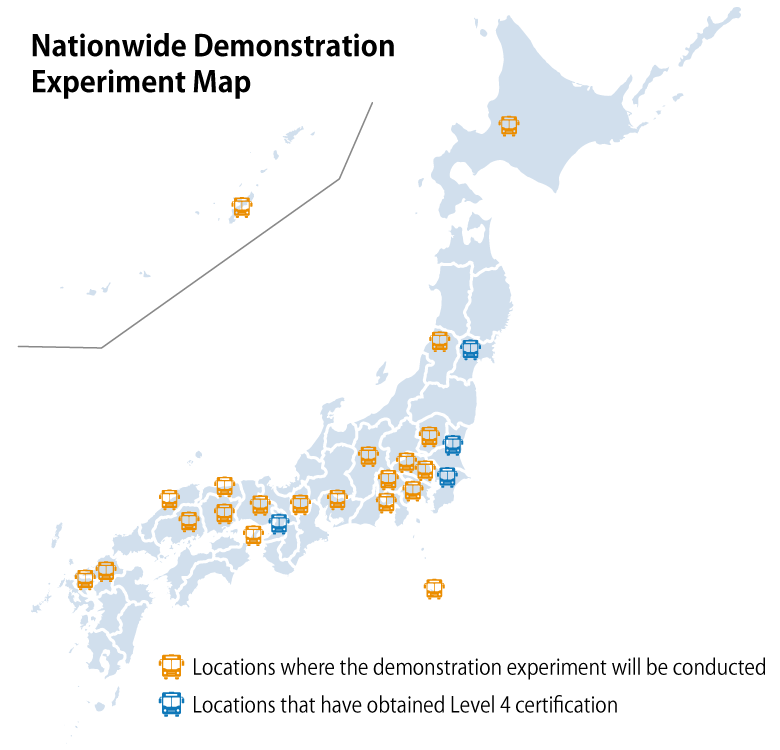
Advanced Smart Mobility has conducted repeated demonstration experiments for autonomous
buses and trucks throughout Japan, accumulating technical validation results and
operational expertise aimed at real-world implementation.
By carrying out projects
across diverse operational environments with varying regional characteristics and
operating conditions, we have established one of Japan’s largest autonomous driving
demonstration networks.
Demonstration Experiment Example
2026/5
self-driving bus
2025/12
Large autonomous sightseeing bus
2025/12
Daytime and nighttime autonomous driving mobility services
2025/11
Large EV autonomous bus
2025/8
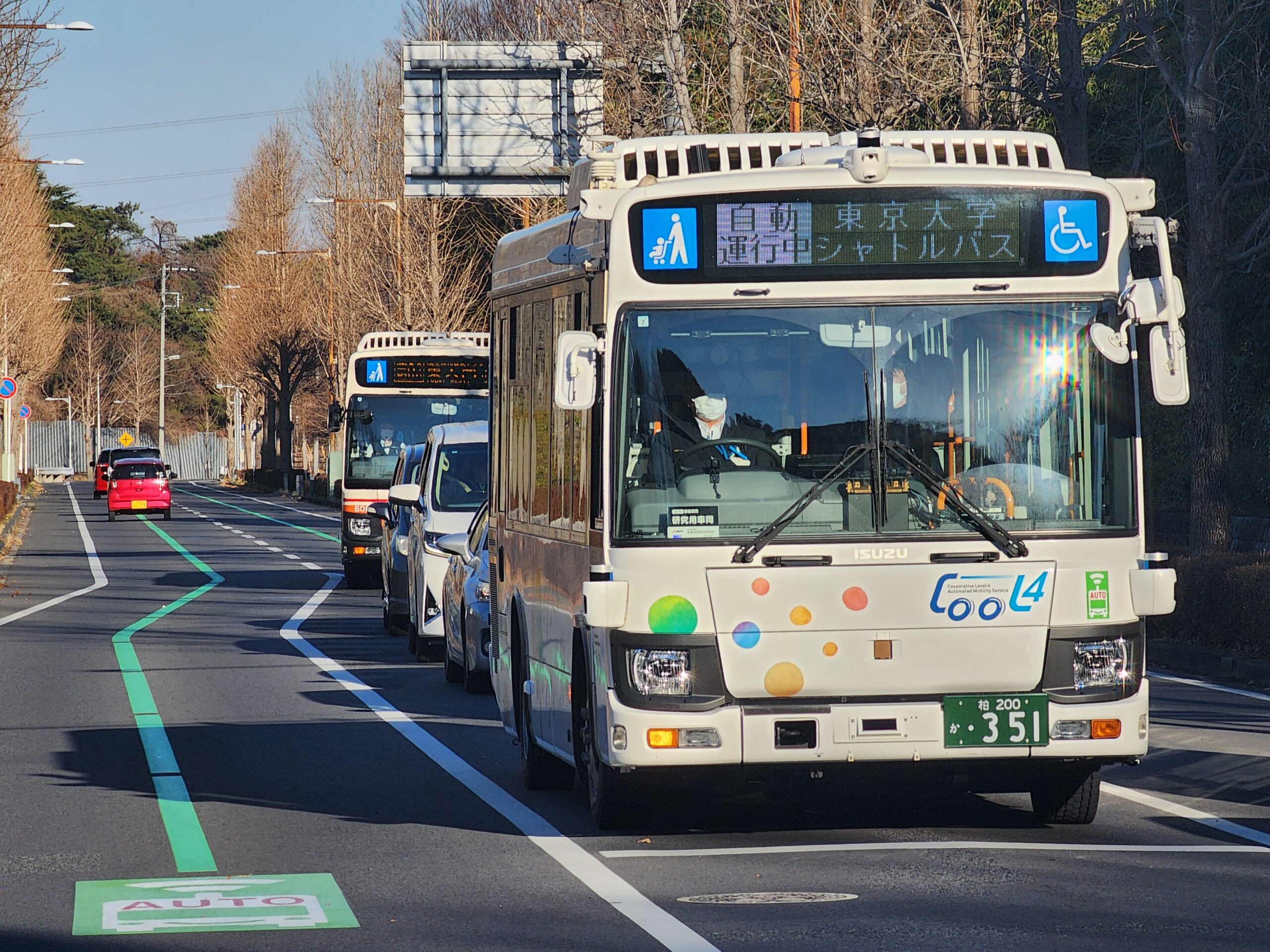
Kashiwanoha Campus
2024/8
Hachijojima Smart Mobility Service Demonstration Project
2023/12
Medium-sized autonomous bus
2023/7
Seibu Bus in 2023
2023/5
Odaiba Mobility & Sightseeing Project
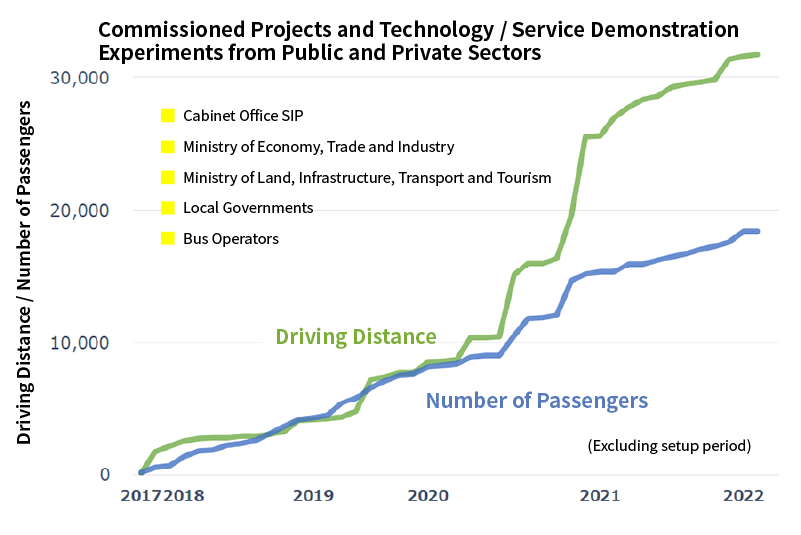
Measuring Operational Performance and Social Implementation Effects of Autonomous Bus Demonstration Projects
At Advanced Smart Mobility, we continuously collect and analyze operational data from autonomous bus demonstration projects conducted nationwide, including driving distances and operation frequencies. In addition, we quantitatively evaluate post-deployment usage trends, transportation improvement effects, and environmental impact reductions, utilizing these insights to help establish sustainable mobility services.
Feedback from People Who Experienced the Demonstration Projects

Living in a mountainous area and having surrendered my
driver's license, I was struggling with the infrequent bus service to the city.
Thanks to the self-driving buses that filled that gap, I can now shop and go to the
doctor in town at my own pace without rushing, which I'm truly grateful for.
At first, I was both scared and surprised to see it driving automatically on
mountain roads, but except for when entering roundabouts, the ride was so smooth it
was almost indistinguishable from a human-driven bus.
I sincerely hope this service continues, as it will become an indispensable part of
the community.
At first, I was a little apprehensive, but the actual
experience gave me a sense of security far exceeding my expectations, and I could
almost feel the future where autonomous driving is commonplace.
What I particularly appreciated was the smooth acceleration and deceleration; there
was hardly any shaking. Even though I usually get motion sickness easily, I found
the ride very comfortable. On the other hand, there were still some areas, such as
construction zones, where I felt human driving was smoother.
I understand there are challenges unique to autonomous driving, such as balancing
safety and ride comfort, but I'm looking forward to seeing how it continues to
evolve in the future.


I rode the bus with a stroller in a busy area with lots of
cars and pedestrians. Since it's self-driving, I expected it to guide me to a wider,
less crowded area, but I was surprised that it stopped perfectly in front of the
stop without any gaps.
I was impressed that I could get on and off smoothly without getting caught on any
steps.
As it becomes a more widespread mode of transportation for daily use, I hope it will
continue to develop in a way that takes into account the needs of various users.